

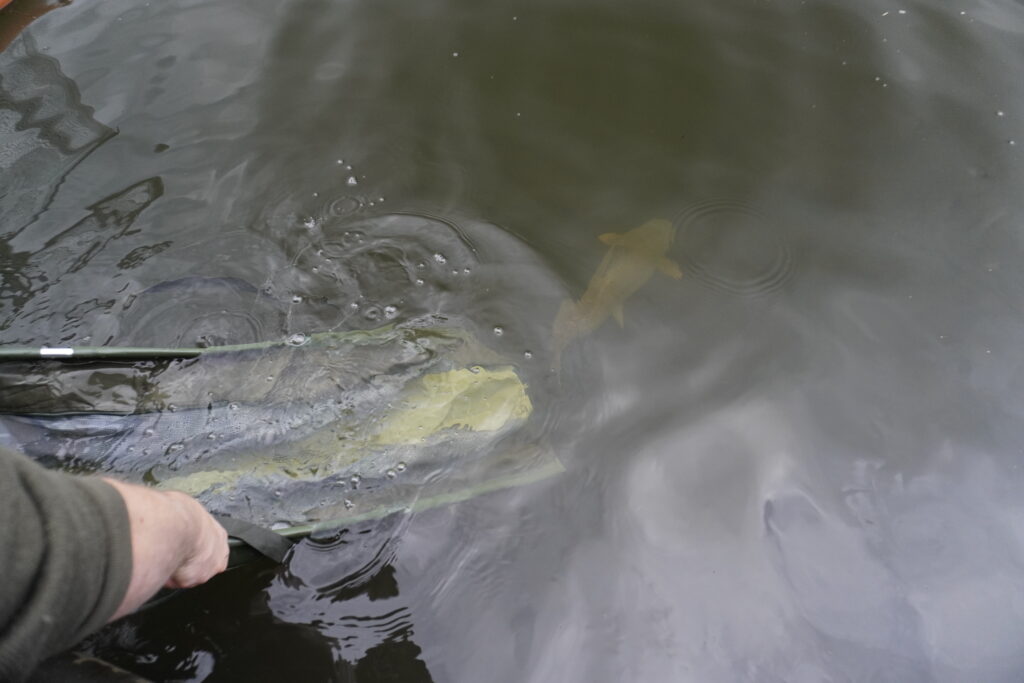
On November 2, members of the OderZusammen – OdraRazem project began equipping fish in the Oder River with transmitters to track their movements in the river over the next year and a half. In this so-called telemetry study, the scientists aim to understand how the fish use their habitat, particularly in the Middle Oder—that is, the section where the river forms the border between Germany and Poland.
The study focuses on four species: barbel, burbot, zander, and catfish. To fit the fish with transmitters, they are briefly captured and then released back into the Oder. Acoustic telemetry—in which a transmitter inside the fish emits sound waves—is linked to a previously established network of underwater receiving stations. The scientists then analyze the data received there. In this way, they aim not only to gain new insights into seasonal movements and migrations but also to learn more about how changes in their habitat affect the fish’s behavior. The data will be used to develop recommendations for sustainable water management of the Oder River.
The study is part of the work package “Habitat-Use Dynamics, Biodiversity, and Resilience of the Fish Community in the Oder River.” More about the work package